




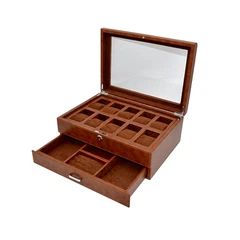
As an important packaging for improving the quality and image of wine, the customization cost of high-end wooden wine boxes has always been a focus of attention for wine producers, brands, and packaging suppliers. This article will delve into the customization cost of high-end wooden wine boxes from multiple dimensions, including material selection, design costs, production processes, quantity and scale, personalized needs, and market trends. The aim is to provide valuable reference for relevant practitioners.
The impact of material selection on cost
There are various types of materials for high-end wooden wine boxes, ranging from common oak, walnut, maple to rare rosewood, ebony, etc. Each material has its own characteristics due to its unique texture, color, and durability, and the price also varies accordingly. For example, oak has become the preferred choice for many mid to high end wine boxes due to its hard texture, beautiful texture, and moderate price; Rare woods such as rosewood and ebony are often used to customize high-end luxury wine boxes due to their scarcity and unique cultural value, but the cost is also significantly increased.
In addition, the increasing awareness of environmental protection has prompted more and more consumers and manufacturers to choose sustainable wood, such as FSC (Forest Stewardship Council) certified wood. Although this increases procurement costs, it helps to enhance brand image and meet consumers' demand for environmentally friendly products.
Design costs and personalized needs
The design of high-end wooden wine boxes is not only about beautifying the appearance, but also a reflection of brand culture. The design cost usually includes the designer's creative ideas, drawing, 3D modeling, and multiple modifications, which vary depending on the designer's qualifications, experience, and design complexity. For high-end customized projects, design costs may account for a significant proportion of the total cost.
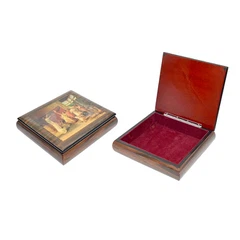
Personalized needs are also an important factor affecting customization costs. Customers may request to carve exclusive patterns, embed metal decorations, add LED lighting effects, etc. on the wine box, and the implementation of these special processes will undoubtedly increase production costs. However, it is precisely these personalized designs that make the wine box a unique piece of art, enhancing the added value of the product.
Production process and quality control
The production process of high-end wooden wine boxes is complex, including multiple steps such as wood cutting, drying treatment, fine polishing, assembly, painting (or maintaining the original wood color), etc. Every step requires exquisite craftsmanship and strict quality control to ensure the quality and durability of the final product. Especially for designs that require fine carving or complex assembly, the difficulty and time of the process will significantly increase, thereby pushing up production costs. In addition, adopting advanced production equipment and technologies such as laser engraving and CNC machining can improve production efficiency and accuracy, but it will also correspondingly increase equipment investment and operating costs.
Quality control is a key link in the production of high-end wooden wine boxes. From raw material inspection to finished product testing, every step needs to be strictly monitored to ensure that the product meets high quality requirements. This includes controlling the moisture content of wood, inspecting the smoothness of polishing, testing the firmness of assembled structures, and evaluating the uniformity and glossiness of surface coating. Although high-quality control standards increase inspection costs, they can effectively reduce defect rates, improve customer satisfaction, and enhance brand reputation.
Quantity scale and cost-effectiveness
The quantity and scale are important factors affecting the customization cost of high-end wooden wine boxes. Generally speaking, large-scale production can reduce the cost of a unit product by sharing fixed costs such as design fees, mold fees, etc. However, high-end wooden wine boxes often pursue personalization and small-scale production, which makes it difficult to reduce costs through economies of scale. Therefore, how to reduce costs by optimizing production processes and improving material utilization while ensuring quality has become a problem that manufacturers need to constantly explore.
Market Trends and Cost Control
With the increasing demand of consumers for high-quality and personalized packaging, the high-end wooden wine box market is showing a trend of diversification and segmentation. Manufacturers need to closely monitor market trends and flexibly adjust product design and production strategies to meet the needs of different consumers. At the same time, through technological innovation and cost control, the cost-effectiveness of products can be improved in order to stand undefeated in the fierce market competition.