


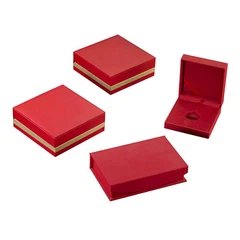

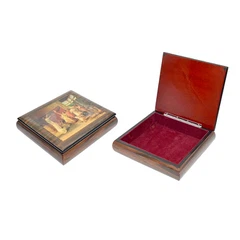

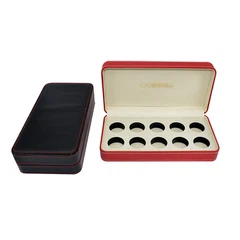
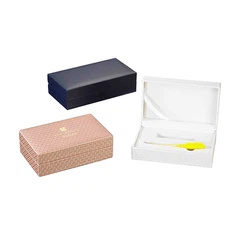
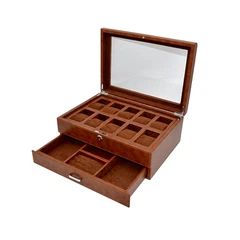
In the highly developed perfume industry today, the phenomenon of product homogenization is becoming increasingly serious. According to Euromonitor data, the global perfume market launches nearly 1200 new products every year, of which 83% have left the market within 18 months. In this red sea, packaging boxes have transformed from simple protective containers to carriers of brand narratives, and their degree of customization directly determines the survival of products on shelves.
1, Sensory password for material selection
Top packaging box designers are well versed in the synesthetic effect of materials and odors. A study by the French Institute of perfumery shows that there is a 30% overlap in the neurons that process touch and smell in the human brain. Therefore, the alabaster from the Italian Alps can enhance the cool feeling of aquatic perfume, and its porous characteristics can also adjust the release rhythm of fragrance molecules; The fiber gap between Japanese Yueqian and paper just contains the complex molecules of Oriental perfume, and each opening and closing is a gradual enlightenment to the sense of smell. The vacuum coating technology adopted by Dior "True Self" series enables the metal box to maintain a constant molecular vibration frequency under the environment of -5 ℃ to 40 ℃, ensuring the freshness of pre flavored citral.
2, The Luxurious Grammar of Structural Mechanics
The golden ratio opening and closing system of Herm è s Packaging Laboratory achieves 0.1 millimeter level error control through 27 precision hinges. This structure originated from the clock technology keeps the opening angle of the box cover at 117 degrees - the best perfume spraying posture verified by ergonomics. More interesting is the "memory metal lining" adopted by Louis Vuitton, whose shape memory alloy will automatically bulge 2.3 mm when the temperature in the box exceeds 28 ℃, forming an airbag to protect perfume. The cost of these invisible technologies often accounts for 43% of the total packaging budget, but creates 78% of high net worth customers' purchasing motivation.
3, The wavelength game of color psychology
The neuroaesthetic experiment conducted by Pantone Color Institute shows that deep violet packaging can increase the perceived concentration of rose notes by 19%, while palladium ash can extend the richness of woody notes by 22 minutes. The Yaobian technology of Chanel No. 5 black gold packaging actually involves crushing 24K gold foil into 800 nanometer sized particles and creating a "visual afterglow" at specific wavelengths through magnetron sputtering. This effect allows consumers to "see" the packaging color even after closing their eyes for 3 seconds, creating a cross sensory brand imprint.
4, Resolving the Paradox of Sustainable Luxury
The "Molecular Deconstruction Packaging" technology developed by LVMH Group uses genetically modified silk protein as the base material. When exposed to specific wavelengths of ultraviolet light, its polymer chains will autonomously degrade into amino acids within 6 months, and the negative ions released during the degradation process can neutralize odor molecules adsorbed during transportation. This seemingly contradictory 'aesthetics of extinction' has actually boosted product premiums to 2.7 times that of conventional packaging, successfully attracting 68% of millennial luxury consumers.
When perfume consumption has entered the era of "five senses marketing", the packaging box is no longer a silent bystander, but an accomplice of smell. Bain consulting data shows that the research and development cycle of high-end perfume packaging has been extended from 4.2 months in 2015 to 9.7 months today, and its cost proportion has also climbed from 12% to 31%. This trend reveals an essence: when fragrance cannot be digitally transmitted, the container that holds it becomes the brand's most loyal sensory ambassador. The future customized battlefield will be how to make the packaging box become the last perfumer to volatilize perfume.